Leveraging Crowd Testing for Diverse Real-Device and User Coverage
Discover how crowd testing improves mobile app quality through real devices, local networks and diverse users. Learn how global tester communities help identify issues that traditional testing labs and emulators often miss.
Leveraging Crowd Testing for Diverse Real-Device and User Coverage
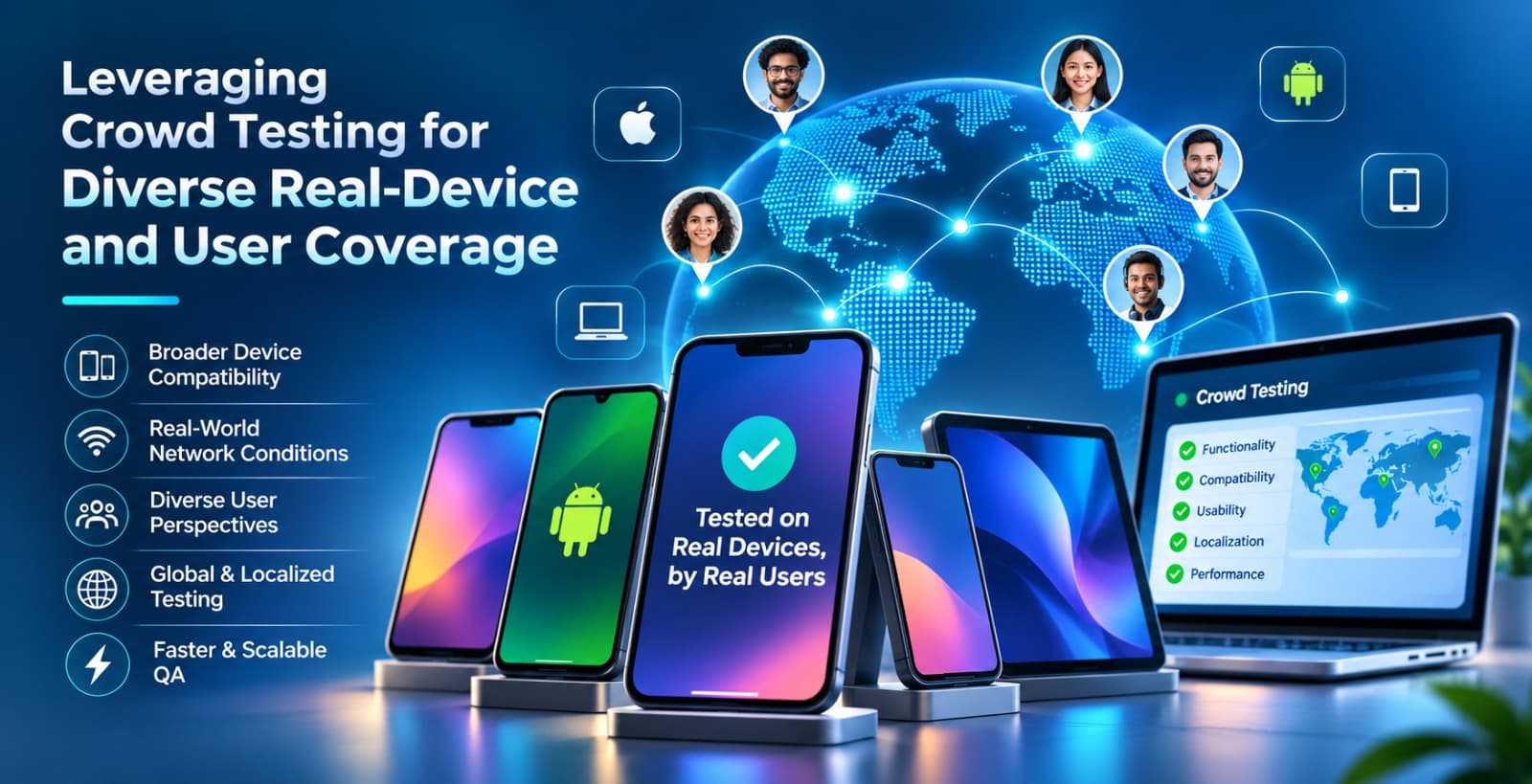
Crowd testing gives businesses real-world device and user coverage that traditional in-house testing labs often cannot achieve. By engaging testers across different locations, devices, SIM operators and networks, businesses can identify issues that may go unnoticed in emulators and limited device labs.
Real users test applications on their own devices, using local networks and operating conditions in the markets businesses serve. This helps improve application quality, compatibility and user experience.
Crowd testing works best alongside in-house QA, complementing existing testing efforts rather than replacing them.
Why In-House Labs Fall Short
An in-house testing lab typically has a limited selection of devices, controlled network conditions and a small number of testing environments. However, real users operate applications under much more diverse conditions.
Emulators may also miss real-device issues such as battery drain, thermal throttling, permission dialogs, notification behavior and performance problems on older devices.
Mobile application quality depends on three important factors that traditional labs cannot fully reproduce:
1. Device Diversity
Different manufacturers, screen sizes, operating system versions, tablets and foldable devices create unique compatibility challenges. Testing across a diverse range of real devices helps identify device-specific issues.
2. Network Diversity
Different local carriers, SIM operators and congested network connections can affect application performance. Real-world network testing helps identify issues that may occur only with specific operators or locations.
3. User Diversity
Different languages, regional habits, accessibility requirements and user behaviors influence how people interact with applications. Diverse testers help validate whether applications deliver consistent experiences across different user groups.
What Crowd Testing Adds
Crowd testing extends testing coverage by bringing together real users, devices and environments from different locations.
1. Real Devices in Real Hands
Testers use their own smartphones and tablets rather than relying only on data-centre device farms. This helps identify issues based on actual hardware, operating systems and real-world usage.
2. Local Networks and SIM Operators
Testing with local SIM cards and network providers helps uncover carrier-specific and location-dependent issues. Problems that occur only with a particular operator or city become easier to reproduce.
3. Native-Language and Cultural Validation
Native speakers can identify incorrect translations, layout problems, currency formatting issues and culturally inappropriate wording that automated translation tools may miss.
4. Faster Testing Through Parallel Execution
Testers across different locations and time zones can work simultaneously, helping businesses complete testing cycles within tight release schedules.
5. Flexible and Scalable Testing Capacity
Businesses can increase the number of testers during product launches or major releases and scale down when testing requirements decrease.
Two Real-World Crowd Testing Examples
Crowd testing provides practical value when applications need validation across specific devices, networks and geographical locations.
Example 1: 22 Testers, 22 Cities, 7 Days
For an Android application that needed testing with two specific SIM operators, Crowd4Test coordinated 22 testers across 22 Indian cities.
Each tester used their own Android device and SIM connection to perform exploratory network testing.
The testing cycle identified 53 defects, including 48 critical or major defects, and the client approved all 53 findings as valid.
This demonstrated how distributed crowd testing can uncover network-related issues across multiple geographical locations.
Example 2: Local Testers Onboarded in 72 Hours
For an urgent fintech cross-border payment project, Crowd4Test onboarded five Peru-based testers within 72 hours, despite the 10.5-hour time-zone difference.
Testers validated payment flows using real devices and local network conditions in Peru.
The project was successfully delivered within three days, demonstrating the importance of local testers when validating financial applications across international markets.
How to Run a Crowd Test That Actually Delivers
A successful crowd testing engagement requires the right planning, tester selection, execution process and reporting.
1. Define Your Real User Footprint
Identify your primary markets, commonly used devices, operating system versions and network carriers using application analytics rather than assumptions.
2. Match Testers to Risk
Select testers based on the application's requirements. For payments, healthcare and other regulated applications, prioritize testers with relevant domain knowledge and suitable testing environments.
3. Combine Crowd Testing and AI
Use automation and AI to support repetitive regression testing and test case generation. Human testers should validate usability, accuracy, accessibility and cultural fit.
4. Demand Reproducible Evidence
Every reported defect should include supporting evidence, such as:
Screen recordings and screenshots.
Device model and operating system details.
Network and SIM operator information.
Application logs, wherever available.
Clear steps to reproduce the issue.
Testing results should be delivered through the client's preferred tracking tools, such as Jira, GitHub and Azure DevOps.
5. Check Security First
Before selecting a crowd testing provider, review its security practices and compliance standards. Look for ISO/IEC 27001 and SOC 2 Type II certifications, NDAs with every tester, role-based access controls and data residency options.
6. Start with a Pilot
Begin with a fixed-scope pilot on one release. Evaluate testing coverage, defect quality, delivery timelines and overall performance before moving to a long-term engagement.
Frequently Asked Questions
What is crowd testing?
Crowd testing uses a vetted network of testers who use their own real devices in different geographical locations to test software under real-world conditions.
It helps identify issues related to devices, operating systems, networks, languages and actual user behavior.
How does crowd testing improve device coverage?
Each tester brings a different device, operating system version, carrier and geographical location. Together, they provide broader testing coverage across combinations that traditional in-house labs may not be able to maintain.
Is crowd testing better than emulators or device farms?
Emulators and device farms are useful for early-stage development and repeatable testing. However, crowd testing helps identify issues that depend on actual hardware, local SIM operators, network conditions and real user behavior.
Most enterprise teams benefit from combining these approaches.
How many devices and countries does Crowd4Test cover?
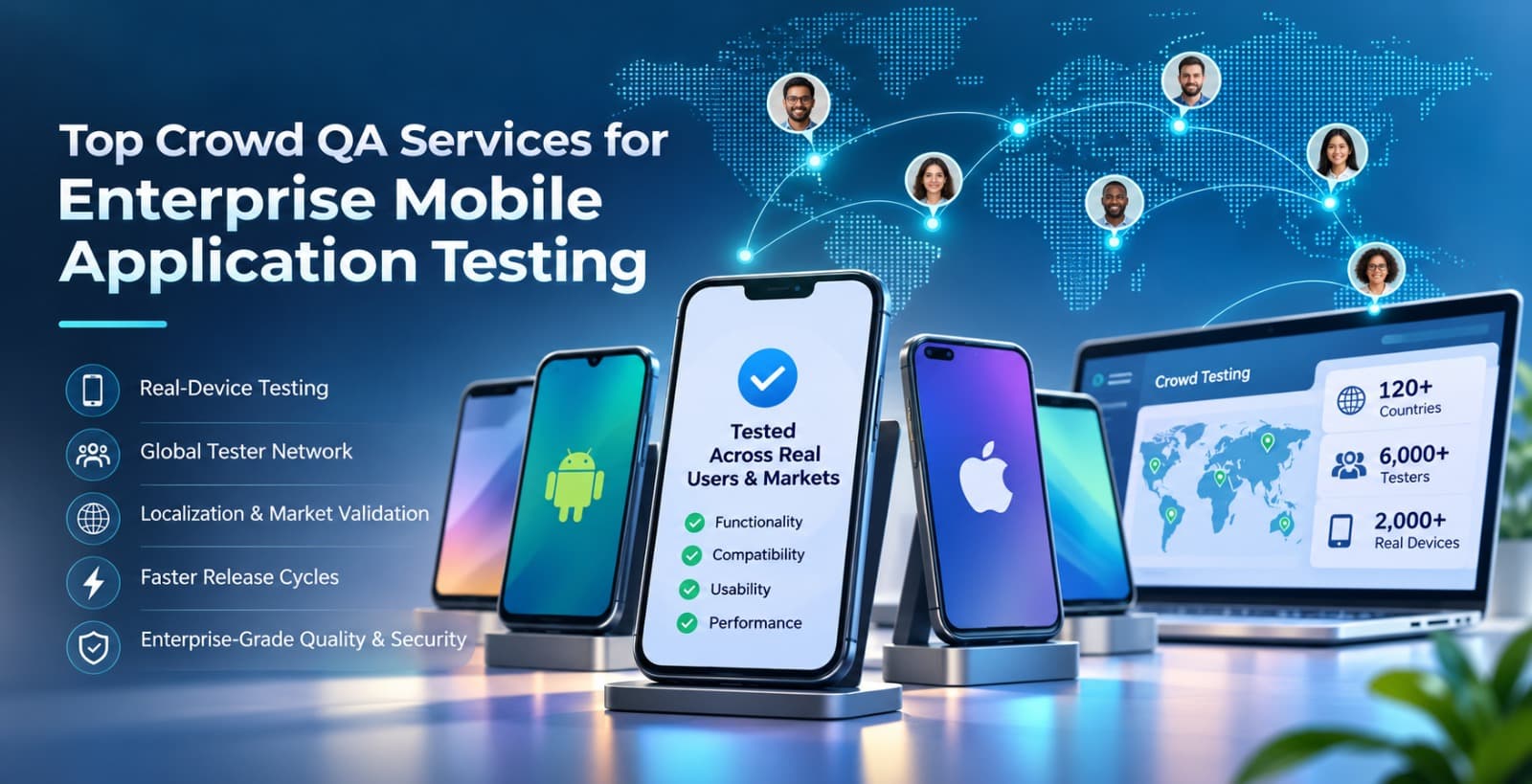
Crowd4Test has 6,000+ vetted testers and 2,000+ real devices across 120+ countries, providing businesses with access to diverse testing environments and global user coverage.
How fast can a crowd test start?
A scoping call is followed by a written test strategy and fixed-price pilot scope, usually within a week.
Crowd4Test has also successfully onboarded local testers in a new country within 72 hours for an urgent fintech testing project.
Conclusion
Your users' devices, networks and languages vary far more than your in-house testing lab can cover. Crowd testing helps close this gap by bringing together real devices, real users and real-world testing environments.
By combining crowd testing with existing QA processes and automation, businesses can improve device compatibility, identify network-related issues and deliver more reliable mobile applications across different markets.
Start with a fixed-scope pilot on one release and experience the benefits of real-world testing coverage.
Start a Two-Week Pilot with Crowd4Test:
Related articles


Ready to ship with confidence?
Book a 30-minute call. We'll map your release process, show you where quality is leaking, and scope a pilot you can run on your next release.